

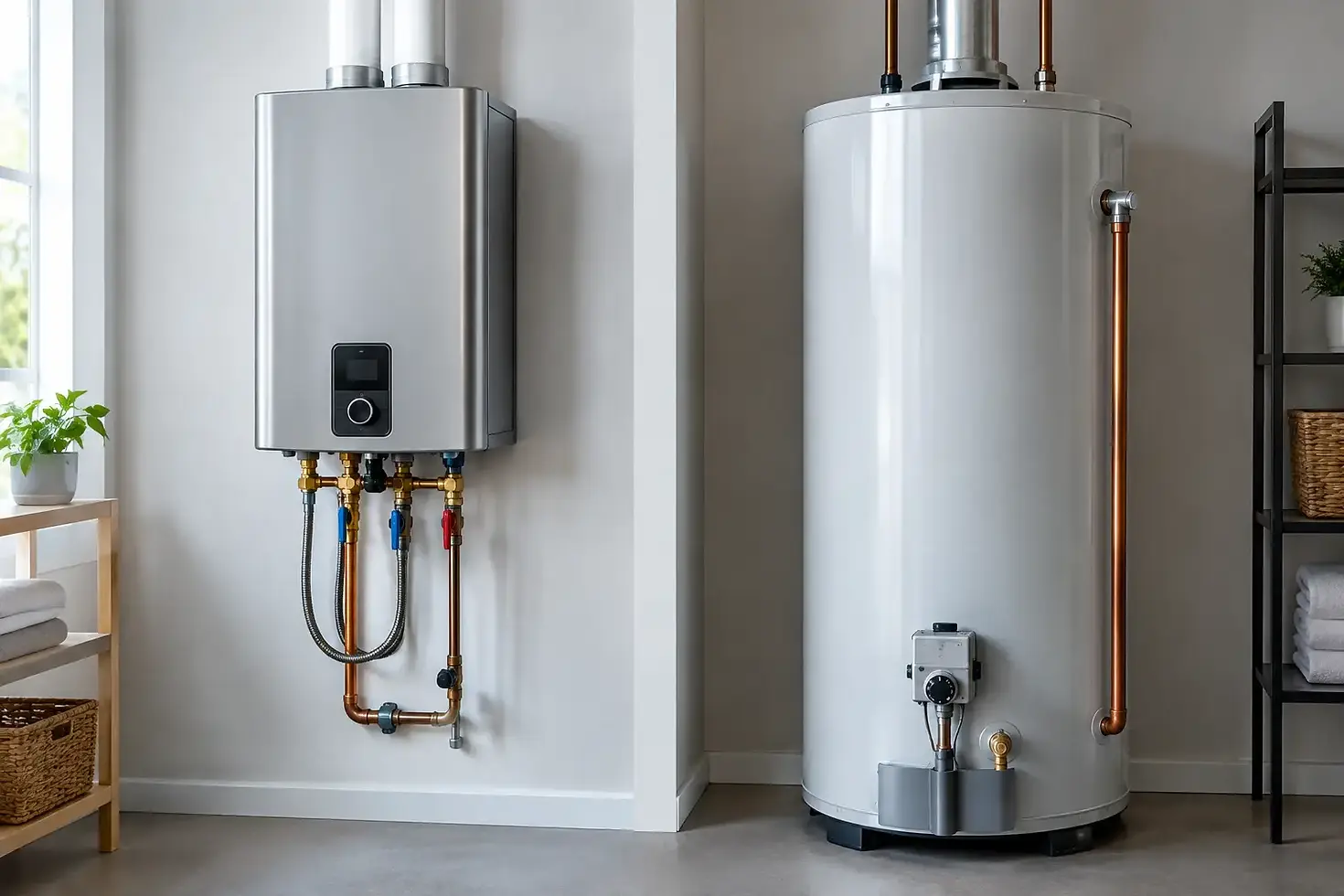
Tankless Versus Traditional Water Heaters
A water heater rarely gets much attention until the shower turns cold, the utility room floor is wet, or a growing household starts running out of hot water every morning. When replacement time comes, the choice between tankless versus traditional water heaters affects comfort, installation cost, energy use, and the way the system serves your property for years to come.
For many Lower Columbia homeowners and business owners, there is no one-size-fits-all answer. A tankless unit can provide hot water on demand and free up valuable space. A conventional storage-tank heater can offer dependable performance at a lower upfront price. The right decision depends on your daily demand, fuel source, building layout, budget, and plans for the property.
Tankless Versus Traditional Water Heaters: The Basic Difference
A traditional water heater stores a set amount of heated water in a tank, commonly 40 to 80 gallons in a home. The unit heats the water, holds it at the set temperature, and refills as hot water is used. Once the stored supply is depleted, the household must wait for the tank to recover.
A tankless water heater heats water as it moves through the unit. When a hot-water fixture opens, the system detects flow and activates its heating element or burner. There is no tank of standby hot water. Properly sized tankless systems can provide a continuous supply, but they are limited by how many gallons per minute they can heat at a given time.
That distinction matters most during periods of heavy use. A large family taking back-to-back showers, running the dishwasher, and doing laundry may benefit from the right tankless setup, but only if the unit is sized for the home’s peak demand. A standard tank can handle several simultaneous needs from its stored supply, although it eventually runs out and needs recovery time.
When a Tankless Water Heater Makes Sense
Tankless water heaters are often a strong fit for properties where space, efficiency, or extended hot-water availability are priorities. Because they mount on a wall, they can be useful in smaller utility rooms, garages, closets, accessory dwelling units, and commercial spaces where floor area matters.
The main appeal is on-demand operation. A tankless unit does not continually maintain a large volume of hot water when no one is using it. That can reduce energy waste, especially for homes with consistent but moderate demand. Many tankless models also have a longer expected service life than conventional tanks when they receive proper maintenance.
For a household that regularly runs out of hot water, tankless can be a practical solution. The key is not simply buying a larger unit. It is calculating real demand. Two showers may each use around 2 gallons per minute, while a washing machine, dishwasher, or kitchen faucet may add more demand at the same time. Incoming water temperature also affects performance. During colder weather, water entering the home needs more heating, which can reduce a unit’s available flow rate.
Installation Requirements Can Be Significant
Tankless equipment is compact, but the installation is not always simple. Gas-fired units may require changes to gas piping, venting, combustion air, or the location of the appliance. Electric tankless units can require substantial electrical capacity, dedicated circuits, and panel upgrades depending on the model and household service.
A replacement project should consider the entire system, not only the appliance cost. This is especially true in older homes, remodels, and commercial buildings where existing plumbing, electrical, and venting systems may not meet the new equipment’s requirements. Coordinating those scopes early helps prevent surprise work once installation begins.
Tankless units also need periodic flushing to remove mineral buildup. Water quality, usage level, and manufacturer requirements determine the maintenance schedule. Skipping service can reduce efficiency and shorten the life of the equipment.
Where Traditional Tank Water Heaters Still Win
A traditional tank water heater remains a sensible, dependable choice for many properties. It usually costs less to purchase and install than a comparable tankless system, particularly when the existing connections can be reused. For an owner replacing a failed unit quickly, that lower initial cost and straightforward installation can be a major advantage.
Tank systems are also familiar to most property owners and are generally easier to service. A properly sized 50-gallon or 75-gallon heater can meet the needs of many households without the added electrical, gas, or venting upgrades a tankless conversion may require.
The trade-off is standby energy use. Even when hot water is not being used, a storage tank cycles to maintain its temperature. Newer high-efficiency tank models are better insulated than older equipment, but they still store heated water around the clock.
Tank life is another consideration. Sediment can collect in the bottom of the tank over time, especially where water contains minerals. Regular maintenance may help, but corrosion and eventual leaks are common end-of-life issues. A leaking tank should be addressed promptly to avoid damage to flooring, walls, stored belongings, or nearby building systems.
Recovery Rate Matters More Than Tank Size Alone
It is easy to focus only on the number of gallons printed on a water heater. In practice, recovery rate is just as important. Recovery rate is how quickly the system can heat a new supply of water after hot water has been used.
A larger tank may be appropriate for a busy household, but fuel type and heater efficiency also affect recovery. A properly selected smaller tank with a strong recovery rate may serve some homes better than an oversized unit that costs more to operate. This is why a site-specific evaluation is more useful than choosing a model based on square footage alone.
Cost, Efficiency, and Long-Term Value
Tankless systems generally have a higher installed cost. The equipment itself may cost more, and conversion work can add to the project total. However, their longer potential lifespan and reduced standby losses can make financial sense for owners who expect to remain in the property for many years.
Traditional tank water heaters generally offer the lower-cost path at installation. They are often a practical choice for rentals, budget-conscious replacements, and buildings where upgrading utility connections would not be cost-effective. Their operating costs may be higher over time, but the actual difference depends on household habits, local energy rates, insulation, and water usage.
For commercial properties, the decision is often more complex. A small office restroom has very different needs than a restaurant, salon, multifamily building, or shop with employee showers. High-demand businesses may need multiple tankless units, a large commercial tank system, storage capacity paired with high recovery, or a designed combination of equipment. Sizing errors can lead to unhappy occupants, operational disruptions, and unnecessary energy expense.
Questions to Answer Before Choosing a Water Heater
Before selecting either system, consider how many people use hot water at the busiest time of day, whether several fixtures run at once, and whether the building has gas service or adequate electrical capacity. Think about available utility-room space, the condition of existing plumbing and venting, and how long you plan to own the property.
It also helps to look beyond normal use. If you are remodeling a bathroom, adding an accessory dwelling unit, expanding a business, or replacing electrical service, the water-heating decision may connect to the larger project. Coordinated planning can make room for the right equipment while avoiding unnecessary rework later.
Cascade Electric Service LLC can evaluate the plumbing and electrical factors that affect a water heater installation, helping property owners choose an option that fits the building rather than forcing the building to fit the equipment.
A new water heater should give you dependable hot water without creating avoidable surprises in your budget or your utility room. Whether the better fit is a tankless unit or a traditional tank, choosing based on real demand and existing building conditions is the best way to protect comfort, efficiency, and long-term performance.


Comments