

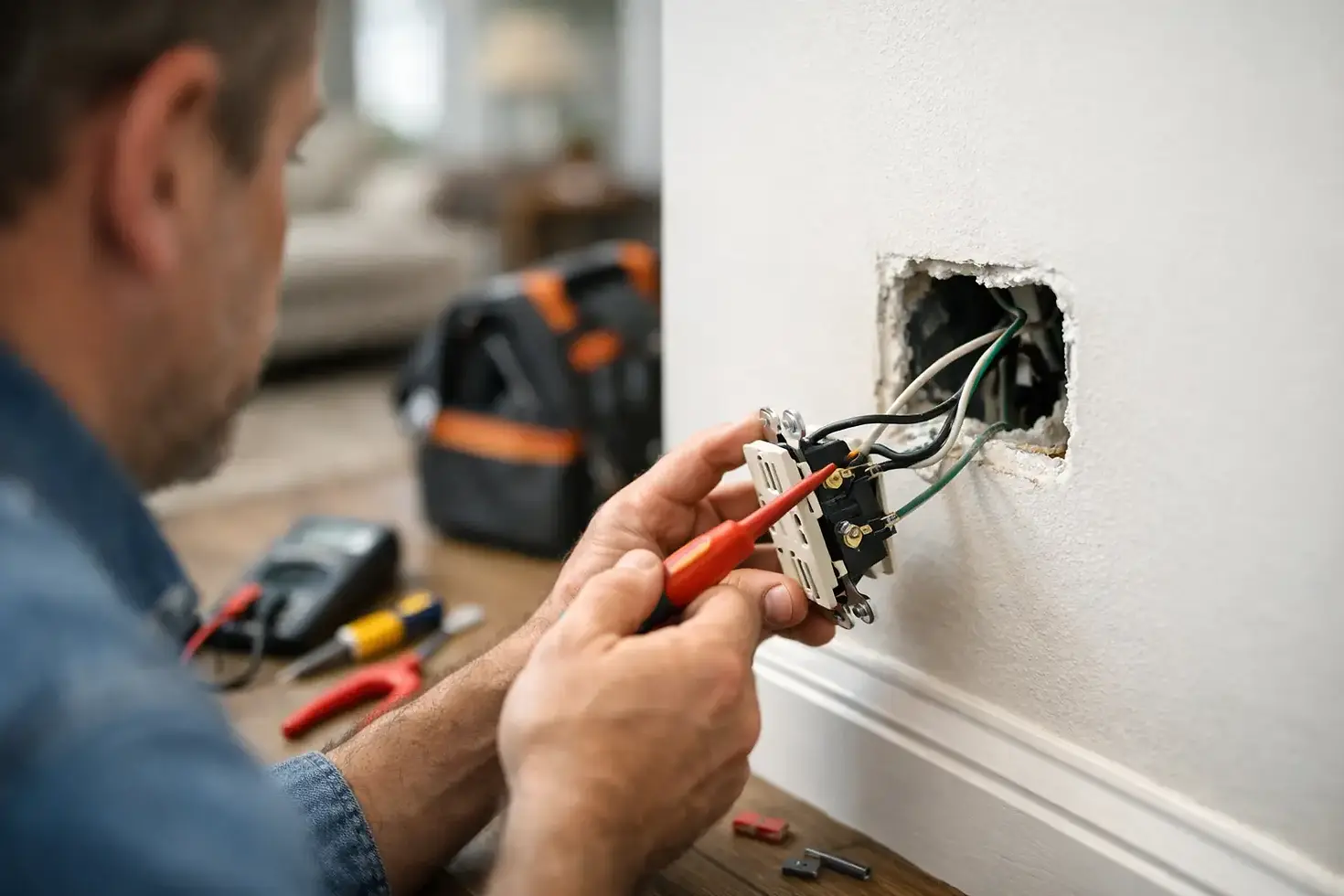
Home Electrical Wiring Repair: What to Do
A warm outlet, lights that flicker when the microwave starts, or a breaker that trips for no clear reason usually means the problem is not going away on its own. Home electrical wiring repair is one of those jobs where quick action matters. Small wiring faults can stay hidden behind walls for months, then turn into lost power, damaged equipment, or a serious fire risk at the worst possible time.
For homeowners and property managers in the Kelso-Longview area, the challenge is not just finding the fault. It is figuring out what is safe to check, what needs a licensed electrician, and how to fix the issue without creating a bigger one. Wiring problems can look simple from the outside, but the cause is often deeper than a bad switch or a loose receptacle.
When home electrical wiring repair is needed
Most wiring issues give some kind of warning before they fail completely. The signs are not always dramatic. Sometimes it is a room that loses power off and on. Sometimes it is a breaker panel with one circuit that trips more than the others. In older homes, it may be outlets that were added over time without enough capacity planning behind them.
If you notice buzzing sounds from outlets or switches, a burning smell, scorch marks, dimming lights, or outlets that stop working intermittently, those are all reasons to take the problem seriously. The same goes for GFCI outlets that will not reset, aluminum wiring connections that have started to loosen, or extension cords being used as a permanent fix because there are not enough working outlets where you need them.
A common mistake is treating these signs as isolated annoyances. In reality, they often point to one of a few bigger issues: overloaded circuits, damaged conductors, loose terminations, aging materials, moisture intrusion, or previous repair work that was never done correctly.
What causes wiring problems in the first place
In many houses, electrical systems have been modified over decades. A kitchen gets updated. A garage gets converted. A shed gets power added. A new HVAC system or water heater goes in. Each change may make sense on its own, but the wiring behind the walls can become a patchwork of different eras, standards, and workmanship.
Age is a major factor. Insulation around conductors can become brittle. Devices wear out. Connections loosen from years of heating and cooling cycles. Panels may still function, but the circuits connected to them can show signs of strain if the home uses more power now than it did when it was built.
Moisture also causes trouble, especially in crawl spaces, basements, exterior walls, garages, and outbuildings. Corrosion at a connection point increases resistance, and resistance creates heat. Rodents are another overlooked source of damage. Chewed insulation can expose conductors and create dangerous short circuits that stay hidden until a breaker trips or an arc fault starts.
Then there is past DIY work. Some homeowners are careful and capable, but electrical work is one area where small mistakes carry real consequences. Reversed polarity, overfilled boxes, missing junction boxes, undersized wire, and splices buried behind drywall are all problems electricians find during repair calls.
What you can safely check before calling
There is a difference between basic observation and hands-on repair. If you suspect a wiring issue, start with the safe side of the line. Check whether the breaker has tripped and whether a GFCI outlet upstream has shut off power to nearby outlets. Pay attention to when the problem happens. Does it occur only when several appliances run at once? Is it limited to one room, one wall, or one time of day?
You can also look for visible warning signs without removing covers or opening electrical equipment. Discoloration on outlet faces, a switch plate that feels warm, or a cord that sparks when plugged in all point to a problem worth professional attention. If you smell burning, hear crackling, or see smoke, shut off power to the affected circuit if it is safe to do so and call for service right away.
What you should not do is start opening boxes, replacing breakers, or cutting into walls unless you are trained and properly equipped. Even when a circuit appears off, there may be multiple feeds, mislabeled breakers, or damage that makes the situation less predictable than it looks.
The real work behind home electrical wiring repair
Proper home electrical wiring repair starts with diagnosis, not guesswork. A licensed electrician will usually begin by isolating the affected circuit, testing for voltage and continuity where appropriate, and checking the load path from panel to device. That process matters because the symptom is not always the source.
For example, a dead outlet may be caused by a failed backstab connection at a completely different receptacle upstream. Flickering lights might come from a loose neutral, which is more serious than a simple bad bulb or switch. A breaker that keeps tripping may be doing its job correctly because a circuit is overloaded or a conductor is damaged somewhere inside the wall.
Once the fault is identified, the repair can range from straightforward to invasive. Sometimes it is a matter of replacing a damaged receptacle, tightening a failed connection, or correcting an improper splice inside an accessible junction box. In other cases, the right fix is replacing a section of cable, separating overloaded circuits, updating grounding, or bringing older wiring into safer working condition.
That is also where a full-service contractor can make a difference. If access requires opening drywall, removing finishes, or coordinating related repairs, it is easier to keep the job moving when one team can handle more than just the electrical side.
Repair or replace? It depends on the scope
Not every wiring issue means the whole house needs to be rewired. In many homes, localized repairs are enough. A damaged branch circuit, a few worn devices, or a poorly done addition can often be corrected without tearing through the entire property.
But there are times when repair alone is a short-term answer. If a home has widespread aging wiring, repeated circuit failures, limited capacity, or known safety concerns tied to outdated materials, replacement may be the more cost-effective path over time. The upfront cost is higher, but it can reduce future service calls, improve safety, and support modern electrical demand.
The key is honest assessment. A good contractor should be able to explain whether the issue is isolated, whether the system has broader weaknesses, and what level of repair makes sense for your budget and plans for the property. If you are remodeling, adding equipment, or updating multiple systems at once, that is often the right time to address wiring more thoroughly.
Why fast response matters for homes and businesses
Electrical failures do not wait for a convenient time. A wiring fault can shut down a rental unit, interrupt business operations, spoil refrigerated inventory, or leave part of a home without heat or lighting. In those situations, the value of repair is not just technical. It is about restoring normal use quickly and safely.
That is especially true when the electrical issue overlaps with other building needs. A leak may damage wiring. A renovation may expose hidden code issues. An emergency call may start with a tripped breaker and end with repairs to walls, fixtures, or equipment after the source is found. Working with one contractor that can manage multiple scopes reduces delay and finger-pointing.
For property owners in the Lower Columbia area, local availability also matters. Response time, familiarity with older housing stock, and accountability after the repair all make a difference when you are trying to solve a problem instead of chasing subcontractors.
How to reduce future wiring repairs
Some electrical problems are simply age-related, but many can be prevented or caught early. If breakers trip often, do not just reset them and move on. If you are planning to add appliances, tools, or office equipment, make sure the circuits serving those areas can handle the load. If part of your property has older outlets, missing GFCI protection, or signs of previous patchwork work, have it evaluated before it turns into an outage.
Routine attention matters after remodeling too. New kitchens, bathrooms, additions, and exterior projects all change how a building uses power. When electrical, plumbing, and construction work are coordinated together, the finished result is usually safer and more efficient because each trade is working from the same plan.
At Cascade, that practical coordination is a big part of the value. When a wiring repair ties into access work, finish repair, or another building system, property owners do not have to manage separate contractors just to get one problem fully resolved.
If something feels off with your electrical system, trust that instinct. Wiring problems rarely improve with time, and the safest repair usually starts with a clear diagnosis from a qualified professional. A quick call now is often the simplest way to avoid a much bigger repair later.


Comments