

Can GFCI Outlets Stop Shocks? What They Do
A bathroom outlet, garage receptacle, or outdoor plug can look perfectly normal while a serious electrical hazard is developing behind it. So, can GFCI outlets stop shocks? They can greatly reduce the risk of severe electric shock in certain situations, but they are not a guarantee against every type of electrical injury. Knowing what they do - and what they do not do - helps property owners make better safety decisions.
Can GFCI Outlets Stop Shocks?
A ground-fault circuit interrupter, commonly called a GFCI, monitors the electricity moving through a circuit. Under normal conditions, the amount of power traveling out on the hot wire should match the amount returning on the neutral wire. If some of that electricity is leaking somewhere else, such as through water, damaged wiring, an appliance housing, or a person, the GFCI detects the difference and shuts off power quickly.
That quick shutoff is the reason GFCIs are required in many places where moisture and electricity are likely to meet. Kitchens, bathrooms, laundry areas, garages, crawl spaces, unfinished basements, outdoor locations, and commercial wash areas often need GFCI protection. A properly working device can interrupt power fast enough to limit the duration of a ground-fault shock.
The key word is limit. A person may still feel a shock before the device trips, and a GFCI cannot protect against every possible electrical contact. It is one layer of protection, not a replacement for sound wiring, grounding, safe work practices, or prompt repairs.
How a GFCI Detects a Ground Fault
A GFCI compares current on the hot and neutral conductors many times each second. When it senses a small imbalance - typically around 4 to 6 milliamps - it opens the circuit. This response is much more sensitive than a standard circuit breaker, which is designed primarily to protect wiring from overheating during an overload or short circuit.
For example, a standard breaker may remain on if a damaged extension cord is leaking a small amount of current through wet ground. A GFCI is designed to react to that leakage. This makes GFCI protection especially valuable around sinks, concrete floors, exterior receptacles, irrigation equipment, and portable tools.
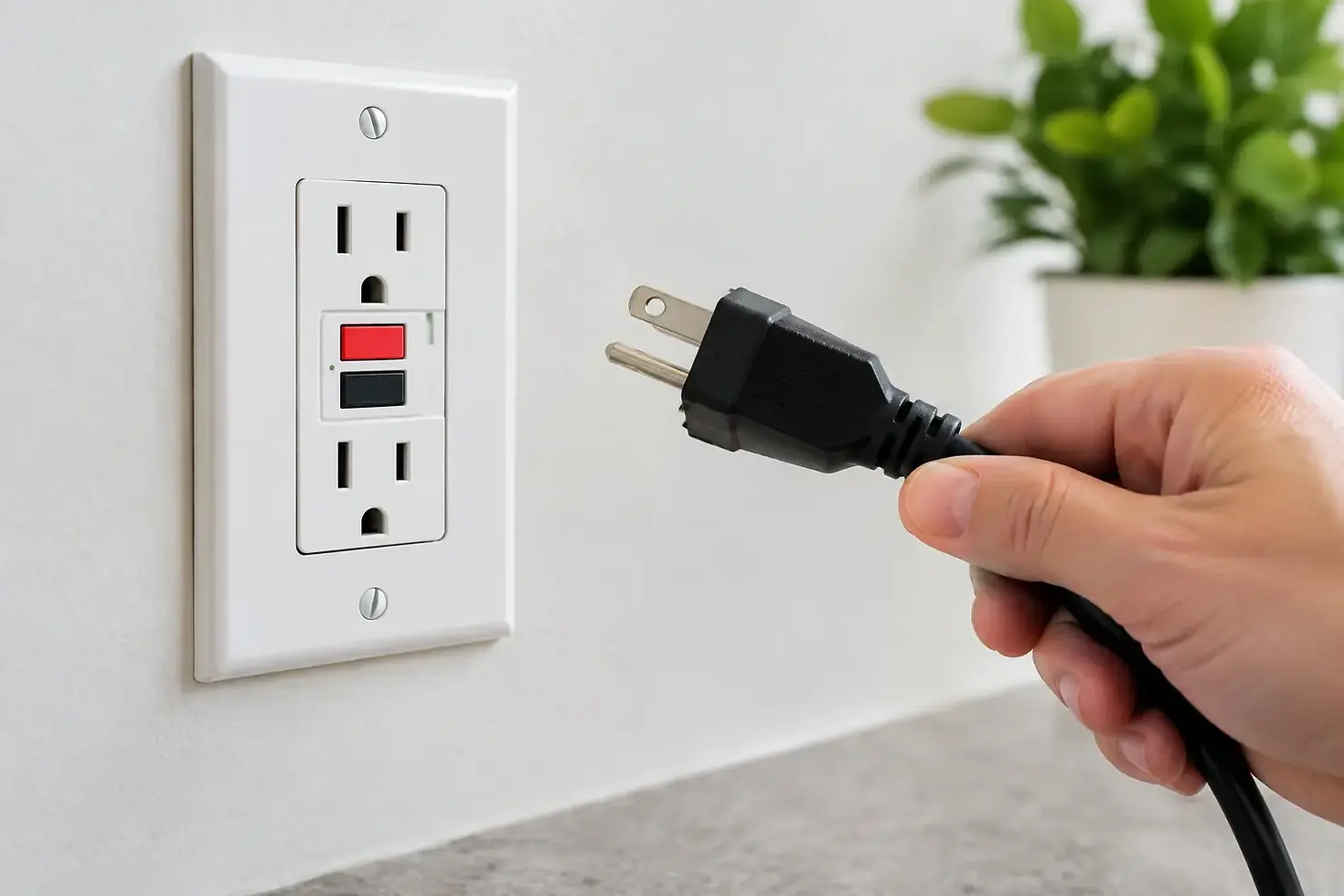
A GFCI can be installed as a receptacle with TEST and RESET buttons, as a breaker in an electrical panel, or as part of certain portable safety devices. In some homes and commercial spaces, one GFCI receptacle protects additional outlets downstream. That is why a dead outlet in a garage or bathroom may be controlled by a GFCI located somewhere else.
When GFCI Protection Can Help
GFCI protection is most effective when electricity takes an unintended path to ground. That could happen when a person uses a corded tool on a damp surface, touches a faulty appliance while standing on a concrete floor, or encounters an outdoor receptacle exposed to moisture.
It can also help when appliance insulation breaks down. A metal-cased dishwasher, garbage disposal, washing machine, or power tool may become energized if internal wiring fails. If leakage current travels through a person or another path to ground, the GFCI can trip before the exposure continues.
For homeowners, this protection matters most in spaces that see water, weather, humidity, or heavy tool use. For business owners, it is equally important in restrooms, break rooms, janitorial areas, kitchens, exterior service locations, maintenance spaces, and anywhere employees use portable electrical equipment.
What GFCI Outlets Cannot Prevent
A GFCI cannot make unsafe electrical work safe. If someone contacts both the hot and neutral conductors at the same time, the current may remain balanced through the GFCI even though the person is being shocked. In that case, the device may not see the leakage imbalance it needs to trip.
It also cannot repair damaged cords, loose connections, overloaded circuits, poor grounding, water intrusion, or incorrectly installed equipment. A GFCI that trips repeatedly is doing its job by identifying a problem, but resetting it over and over without finding the cause creates risk.
A GFCI is also different from an arc-fault circuit interrupter, or AFCI. AFCIs are intended to detect dangerous arcing that can lead to fires, while GFCIs focus on ground-fault shock protection. Some circuits require both protections. A licensed electrician can determine what applies to a particular home, tenant space, or renovation project.
Testing a GFCI Outlet Safely
GFCIs need periodic testing because mechanical and electronic components can fail over time. The test is simple for a receptacle with clearly marked buttons. With power on, press TEST. The reset button should pop out and power to that outlet should turn off. Press RESET to restore power.
If the outlet does not trip when tested, will not reset, feels warm, shows discoloration, makes a buzzing sound, or has visible damage, stop using it until it has been inspected. Do not assume an outlet is safe just because it still supplies power. A failed GFCI may continue to operate as a standard outlet while no longer providing ground-fault protection.
Panel-mounted GFCI breakers should also be tested according to the manufacturer's instructions. If testing affects equipment that should not be shut down, such as refrigeration, medical equipment, a sump pump, or critical business systems, schedule the work so those loads can be managed safely.
Why a GFCI Keeps Tripping
A single trip after heavy rain, a spill, or use of a damaged tool may point to a clear cause. Repeated tripping deserves professional attention. Common causes include moisture in an exterior box, a failing appliance, worn extension cords, damaged underground wiring, incorrect line and load connections, or a GFCI device that has reached the end of its service life.
Start by unplugging items from the affected circuit and attempting one reset. If it holds, reconnect equipment one item at a time to identify the likely source. If it will not reset, trips with nothing plugged in, or controls equipment you cannot safely take out of service, leave it off and call an electrician.
Avoid bypassing the device, replacing it with a standard receptacle, or installing a larger breaker. Those actions can remove a warning sign without correcting the underlying hazard. They may also create code, insurance, and liability concerns for property owners and businesses.
When to Treat the Problem as Urgent
Electrical safety concerns become urgent when there is a shock, burning odor, smoke, sparking, heat at an outlet or panel, water entering electrical equipment, or a breaker that will not stay on. If someone is still in contact with a live source, do not touch them directly. Shut off power if it can be done safely, call 911, and follow emergency instructions.
For less immediate but still serious concerns, a qualified electrician can inspect the circuit, test the GFCI protection, check grounding and connections, and identify whether the issue begins with an outlet, appliance, wiring run, or electrical panel. Cascade can coordinate electrical work with plumbing or construction repairs when moisture damage, a remodel, or a building-system failure involves more than one trade.
A working GFCI is a small device with a major safety role, especially in the wet, hardworking areas of a property. Test it regularly, take repeated trips seriously, and have damaged or questionable electrical equipment checked before the next reset becomes a bigger problem.


Comments